
Lessons in Vegetation Management from California’s Park Fire

Rights of way (ROW) are other places that deserve particular consideration when it comes to wildfire risk. These areas, which are frequently transitional spaces between natural and developed areas, are critical to infrastructure and public safety. Vegetation managers, as the stewards of ROWs and other acreage, are crucial to mitigating wildfire risks and helping contain any fires that break out.
Integrated vegetation management (IVM) is a valuable tool in this fight against wildfires. A comprehensive IVM program includes mechanical, cultural, biological and chemical control methods to reduce fuel density, lessening the risk and potential severity of wildfires. The mix of tactics will depend on the specific vegetation management goals of a given area.
If it seems like every time you turn on the news you see a story about a wildfire raging out of control, you’re not imagining things. The risk of wildfires continues to grow across the U.S. as climate and weather conditions elevate fire threats.
You might recall news stories from the summer of 2024 about Northern California’s Park Fire, one of the largest in the state’s history. It demonstrated how quickly a wildfire can spread and how long it can take to contain it. What you may not know is the important role vegetation management played in ensuring the fire was not far worse. It’s an example of how integrated vegetation management can be a vital tool in protecting communities from wildfires.
Wildfires are getting worse, but IVM can help
Wildfire risk used to be confined mostly to the western U.S., but as more areas of the country face heat waves and drought, fires are becoming more common across the country. They’re happening three times more frequently and burning four times more acres than they did a generation ago.1 And it keeps getting worse. Last year, there were nearly 78,000 wildfires in the U.S., 10,000 more per year than a decade ago.2 This increase in severity is caused by multiple factors, including environmental moisture deficits and fuel density, where thick brush leaves wooded areas in particular at greater risk.
Rights of way (ROW) are other places that deserve particular consideration when it comes to wildfire risk. These areas, which are frequently transitional spaces between natural and developed areas, are critical to infrastructure and public safety. Vegetation managers, as the stewards of ROWs and other acreage, are crucial to mitigating wildfire risks and helping contain any fires that break out.
Integrated vegetation management (IVM) is a valuable tool in this fight against wildfires. A comprehensive IVM program includes mechanical, cultural, biological and chemical control methods to reduce fuel density, lessening the risk and potential severity of wildfires. The mix of tactics will depend on the specific vegetation management goals of a given area.
IVM uses a combination of practices to control vegetation and reduce fire risk:
Mechanical/manual — mowing, lopping, cutting, mastication
Cultural — introducing desirable native vegetation, mulching
Biological — grazing animals, planting desirable vegetation
Chemical — use of selective herbicides
Prescribed burns — strategically planned for fuel removal
Shaded fire breaks can help
One of the most successful tactics for controlling fires is creating and maintaining shaded fuel breaks by thinning low-growing vegetation to give fires less fuel to feed on. Fire breaks help slow fire spread while also providing entry points for firefighters to access the burn area as they work to control a fire’s behavior. IVM can be valuable in creating and maintaining shaded fuel breaks, as happened when the Park Fire broke out in Northern California in the summer of 2024.
The Park Fire – a case study
The Park Fire was the fourth largest wildfire in California’s history, burning 429,603 acres across Butte and Tehama counties. It began July 24, 2024, in a Chico, California, park as a result of arson, with weather and climate conditions causing it to spread rapidly. It quickly grew to threaten the Lassen National Forest, the Ishi Wilderness, thousands of people and hundreds of homes in the Sierra Nevada foothills. It took more than two months to fully contain the fire at an estimated cost of more than $350 million. More than 700 structures were destroyed, many of them homes. Luckily, there were no fatalities.
It might have been a different story if not for prior IVM work done by the California Department of Transportation (Caltrans). Despite the Park Fire’s rapid spread, a coordinated approach to ROW vegetation management and shaded fuel breaks stopped the fire in its tracks, protecting homes and infrastructure.
In 2021, Caltrans started a fuels reduction effort, creating shaded fuel breaks near roadways, including along a 15-mile stretch of Highway 32 in Butte County. The project included creating a bare ground fire prevention strip and a shaded fuel break, removing downed trees and using masticators and herbicides. As a result, the Park Fire did not reach past the shaded fuel break. Photos (below) show where the break stopped the fire’s spread, protecting many homes and limiting damage. It also protected Caltrans infrastructure like guardrails and signage.
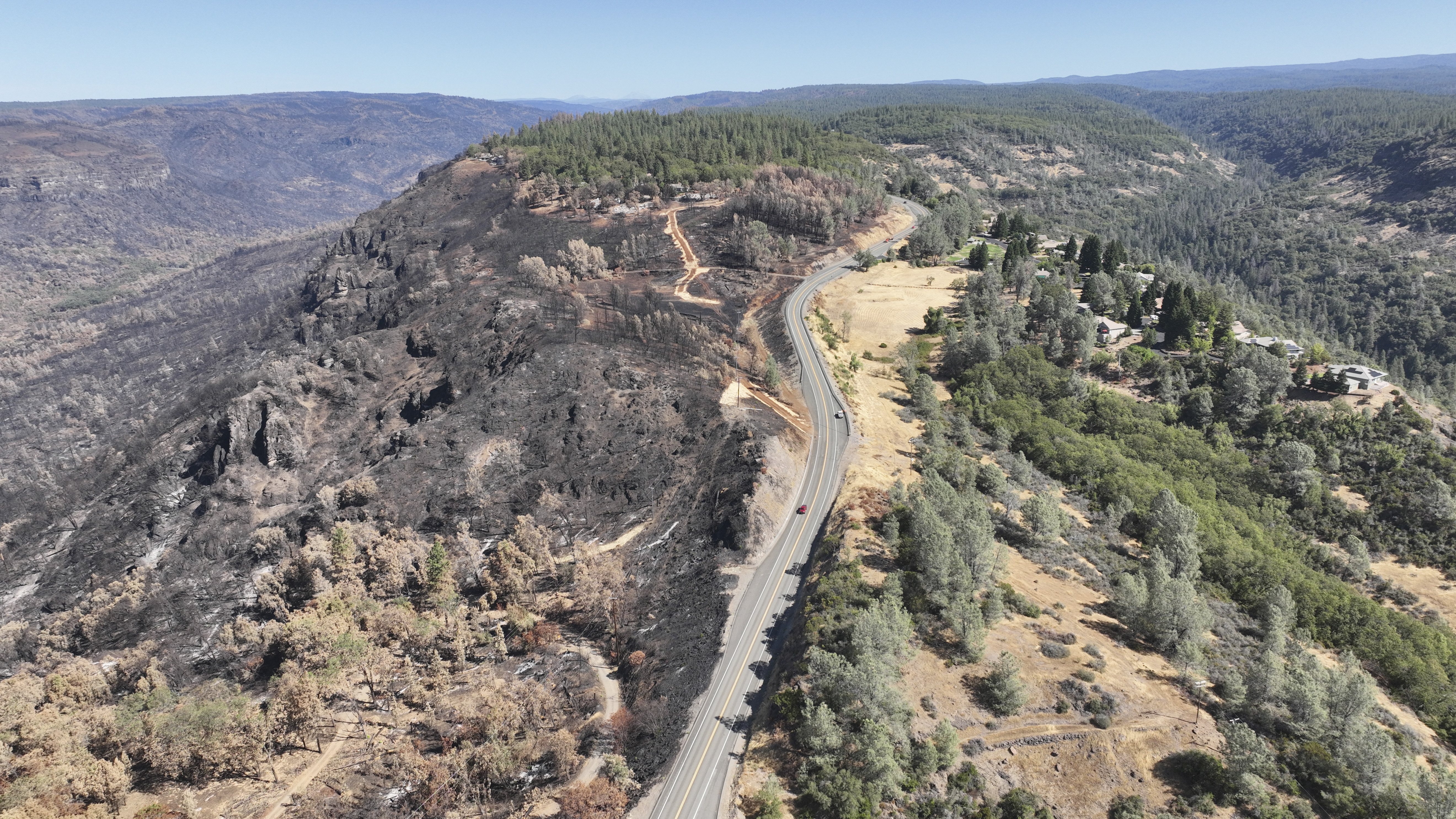
This view of California Highway 32 in Butte County shows the shaded fuel break on the left that stopped fire spread from the Park Fire in 2024. (Photo courtesy of Caltrans.)
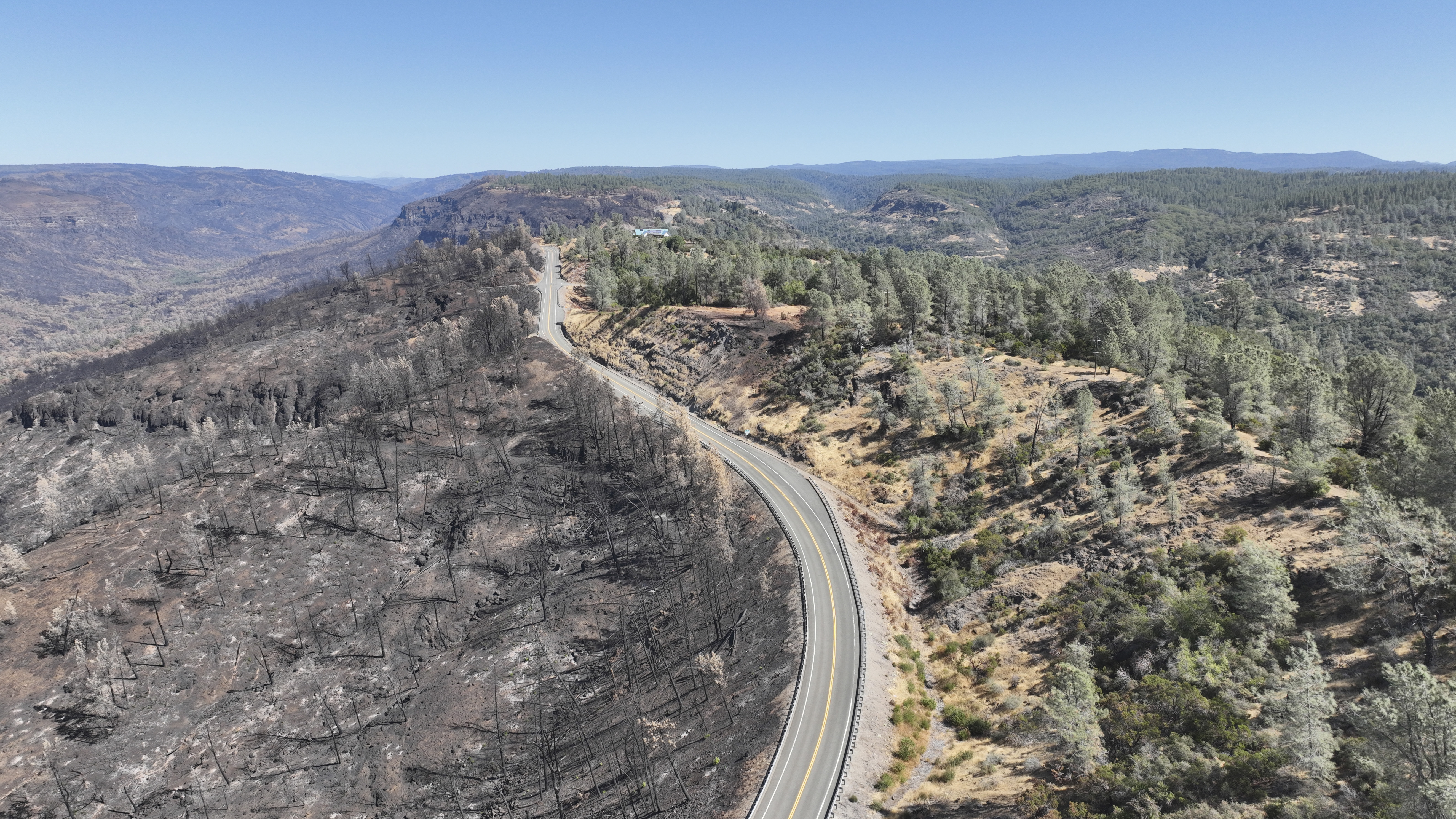
A fire break along this road clearly delineates land that was decimated by the Park Fire (left) from the landscape (right) that was left unscathed. (Photo courtesy of Caltrans.)
Caltrans has expanded its shaded fuel break efforts further since the Park Fire. A multi-agency effort has led to the creation of overlay maps to identify ROWs at high risk for fire and the evacuation routes that must be protected. IVM for these areas – including fire prevention strips and shaded fuel breaks – then becomes a priority.
Caltrans is also expanding its partnerships with private companies, other government agencies, nonprofits and even homeowners to change their fuel management practices. This includes businesses like Sierra Pacific Industries, government agencies like the Bureau of Land Management and the U.S. Forest Service, as well as conservancy groups – partners that in the past might have resisted the use of herbicides. These stakeholders are seeing the results of IVM in fuel break projects and starting to realize that while shaded fuel breaks aren’t always aesthetically pleasing, they’re practical. Plus, they improve safety and can lower insurance rates for homeowners and businesses.
Lessons learned from the Park Fire
Kris Mitchell is the Caltrans District 3 Vegetation Manager who oversaw fuel reduction projects that were completed prior to the Park Fire. That experience highlighted some best practices for creating a ROW IVM and fire mitigation program. Here’s her advice:
- Help teams become IVM experts, since not everyone working on a ROW team has a vegetation management background. The team could include maintenance, landscape architecture, environmental science or other disciplines, so make sure everyone understands the IVM goals.
- Create teams with vegetation management plan leaders who can see the big picture and balance operational, safety, aesthetic and fire prevention goals.
- Talk to area foresters to get their perspective on fuel management. They can advise crews on what to look for and offer tips on thinning and maintenance.
- Partner with other area stakeholders, share information about the benefits of shaded fuel breaks and work together to improve fire mitigation.
- Share knowledge between government entities, private companies, researchers and others to identify techniques or products that might help with fire mitigation.
Integrated vegetation management can be an integral part of helping reduce damage and loss in the event of a wildfire. The Park Fire showed how proactive management, including shaded fire breaks, can help contain the spread of the devastation.
To learn more about mitigating wildfire risk or read the Park Fire case study:
Mitigating Wildfire Risk in Rights-of-Way with Integrated Vegetation Management
1 Virginia Iglesias, “LA fires: Why fast wildfires and those started by human activities are more destructive and harder to contain,” PreventionWeb, January 13, 2025, https://www.preventionweb.net/quick/92047.
2 “Wildfires and Acres,” National Interagency Fire Center, accessed March 26, 2026, https://www.nifc.gov/fire-information/statistics/wildfires.
Techline Invasive Plant News
Sharing innovative research, success stories and tips with invasive plant managers.